Blurred vision, redness, flashes, headaches and changing glasses power do not all call for the same appointment. Use the symptom, speed of onset and relevant medical history to decide between optometry, a comprehensive eye examination, ophthalmology, emergency care or a subspecialist review.
Key takeaways
- Seek urgent care for sudden vision loss, severe pain, flashes or chemical injury.
- Book a comprehensive eye examination when symptoms are persistent, unclear or changing.
- Choose retinal, glaucoma, cornea, cataract or paediatric services by symptom and risk.
- Compare diagnosis, treatment options, follow-up and emergency access before choosing a clinic.
Decide first: does your eye problem need emergency care?
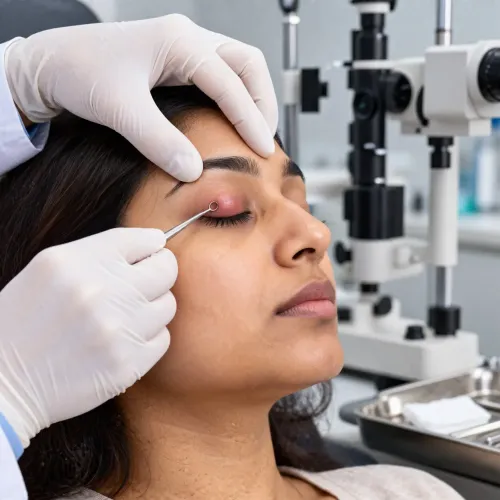
Sudden vision loss, a curtain or shadow, new flashes with a sudden shower of floaters, severe eye pain with nausea, chemical exposure or penetrating trauma requires immediate ophthalmic assessment—not a routine search for eye clinic services near me. Retinal detachment, acute angle-closure glaucoma and serious injury can worsen quickly.
New binocular double vision, a drooping eyelid, unequal pupils, weakness, speech difficulty or severe headache also needs urgent medical evaluation. The cause may be neurological rather than a need for stronger spectacles.
Before reaching emergency care:
- Flush a chemical-exposed eye with clean running water for at least 15 minutes. Hold the eyelids open and remove contact lenses if they come out safely.
- Do not rub an injured eye or press on it.
- Do not pull out glass, metal or another embedded object; cover the eye loosely with a clean shield.
- Avoid driving after sudden visual change, severe pain or double vision. Ask someone to take you to an emergency department or ophthalmic service.
| Symptom | Urgency | What to do |
|---|---|---|
| Sudden loss, curtain, flashes with floaters | Immediate | Go now for a dilated retinal assessment |
| Severe pain, nausea, blurred vision, halos | Immediate | Seek emergency ophthalmology; do not wait for routine drops |
| Chemical splash or penetrating injury | Immediate | Irrigate or shield as described, then go now |
| New double vision with weakness, speech trouble or headache | Immediate | Call emergency medical services |
| Redness with discharge but stable vision | Same-day advice | Arrange assessment, especially with contact-lens use |
Match the symptom to the right eye service
If you are asking “which ophthalmic service do i need in mumbai?”, use the symptom and the decision you need made. A glasses change is different from unexplained vision loss, and recurring irritation needs a different clinician from a suspected retinal problem.
| Option | Best match | Book |
|---|---|---|
| Optometrist | Stable vision and a routine glasses or contact-lens change | Optometry, if there is no pain, disease or sudden change |
| Comprehensive eye examination | New blur, headaches, eye strain, glare, reading difficulty or changing prescription without a clear cause | An examination that goes beyond refraction, including eye-health checks |
| Ophthalmologist | Eye pain, persistent redness, discharge, injury, unexplained vision loss or a possible need for treatment or surgery | Medical eye assessment; contact-lens redness with pain, light sensitivity or reduced vision needs urgent review |
| Cornea and external-eye specialist | Recurrent dry eye, itching with eyelid inflammation, keratitis, corneal scar or unexplained light sensitivity | Corneal assessment rather than a refractive-surgery consultation |
| Retina specialist | New flashes, floaters or a shadow affecting vision | Prompt retinal assessment, using dilation and retinal imaging when indicated |
| Glaucoma specialist | Risk of glaucoma, suspicious optic nerves or abnormal pressure | Assessment combining pressure, optic-nerve, visual-field and angle checks |
| Paediatric or neuro-ophthalmology | Childhood vision problems or double vision linked to eye movement or nerves | The matching subspecialist |
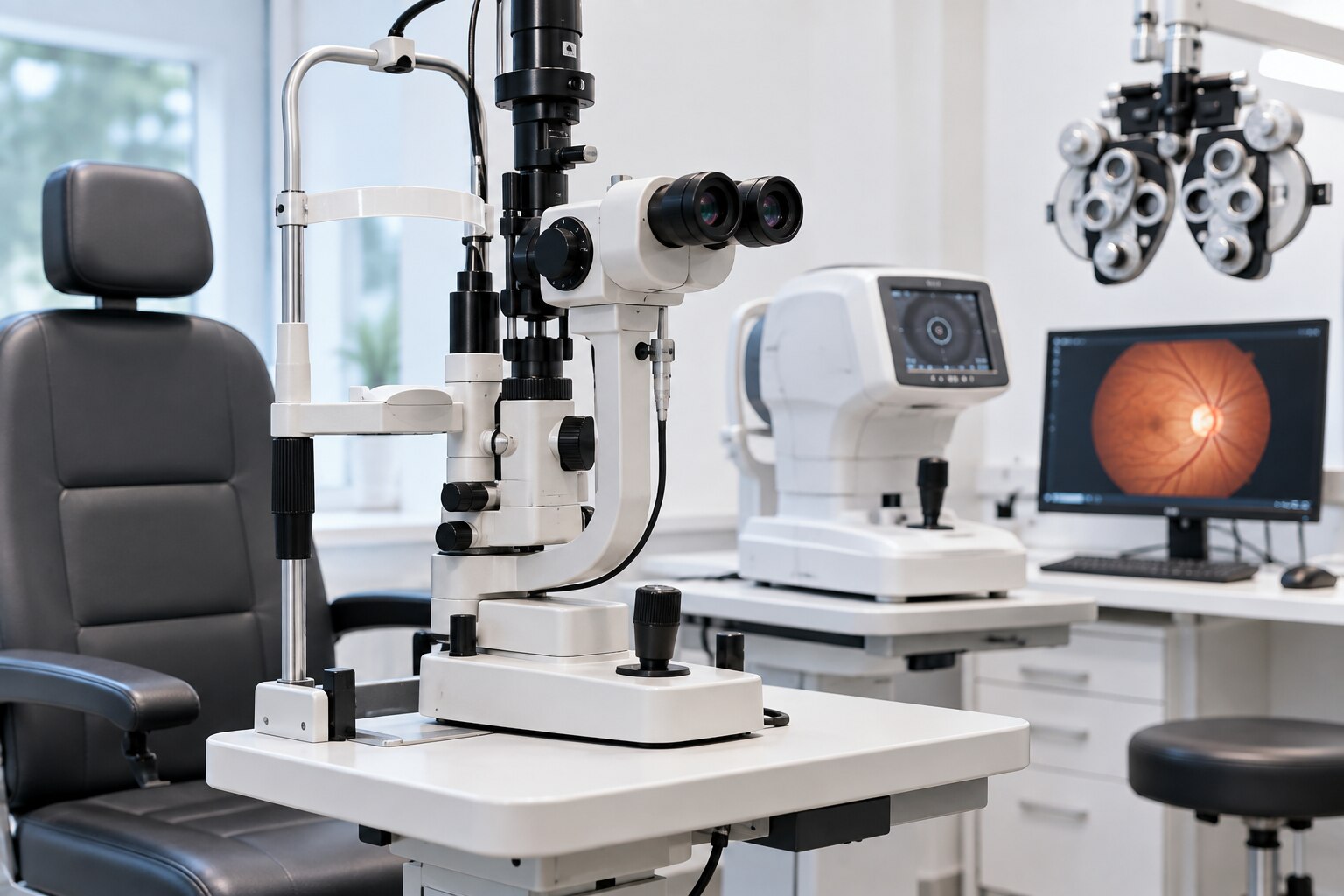
Eye specialist services in Mumbai vary in equipment and referral access. Before booking, ask whether the clinic provides slit-lamp examination, tonometry, dilated-retina assessment, visual fields, OCT and an emergency pathway for symptoms that worsen suddenly.
Know what a proper eye examination can reveal
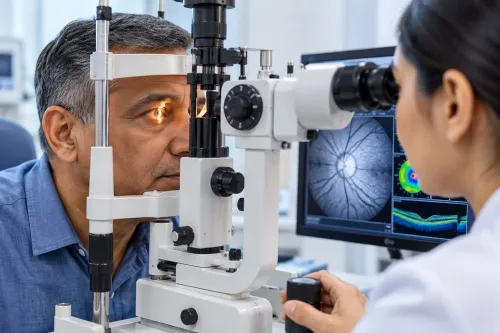
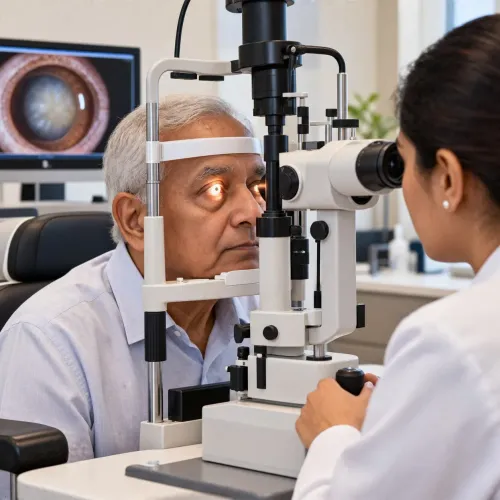
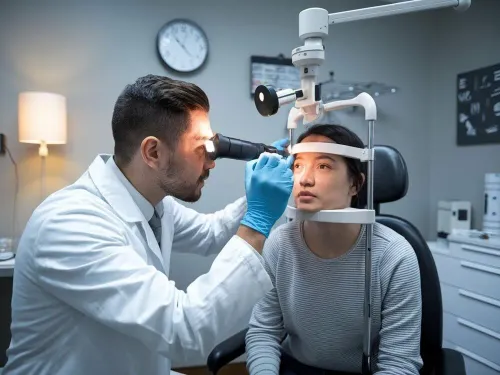
A glasses-only vision test measures how clearly you read letters through different lenses. A comprehensive eye examination also looks for disease, injury and changes behind the prescription, so it is the better starting point when blurred vision, headaches, eye strain or changing power has no clear cause.
| Examination | What it includes | What it can reveal |
|---|---|---|
| Glasses-only test | Visual acuity and refraction | Whether a new lens prescription improves focus |
| Comprehensive eye examination | Acuity, refraction, eye movements, pupils, slit-lamp examination, eye-pressure measurement and a dilated retinal examination | Corneal or lens problems, inflammation, glaucoma risk, retinal tears, bleeding, macular disease and optic-nerve changes |
Ask which of these clinical tests your symptoms require:
- Tonometry measures intraocular pressure; it helps assess glaucoma risk but cannot diagnose glaucoma alone.
- Visual-field testing maps missing areas in your side or central vision.
- Optical coherence tomography (OCT) creates cross-sectional images of the macula and optic nerve. It documents structure but does not replace a dilated examination.
- A dilated retinal examination is important for flashes, floaters or distortion because it can distinguish harmless vitreous changes from a retinal tear, detachment, bleeding or macular disease.
Optometrists commonly provide refraction and optical correction. Ophthalmologists diagnose eye disease and provide medical or surgical treatment. When comparing ophthalmic services in Mumbai, confirm that the clinic offers slit-lamp examination, tonometry, dilated-retina assessment and referral or access to the relevant subspecialist.
Choose screening or diagnosis for diabetes, blood pressure and glaucoma risk
Normal vision does not rule out retinal damage. Arrange diabetic retinal screening even when you see clearly: people with type 2 diabetes need it at diagnosis, while type 1 diabetes requires screening within five years of diagnosis. Pregnancy with diabetes needs earlier review.
People with newly diagnosed, poorly controlled or long-standing high blood pressure should also have a dilated retinal examination; well-controlled blood pressure alone has no universal eye-screening interval.
| Risk group | How often to review | What screening looks for |
|---|---|---|
| Diabetes | At diagnosis for type 2; within 5 years for type 1; follow-up set by retinal findings | Diabetic retinopathy, macular swelling and bleeding |
| High blood pressure | At diagnosis, when control is poor, or when vision changes; no fixed interval for stable control | Retinal haemorrhages, narrowing vessels and optic-nerve damage |
| Glaucoma risk | Baseline assessment around age 40; higher-risk adults often need reviews every 1–2 years | Raised pressure, optic-nerve change, visual-field loss and angle abnormalities |
Glaucoma risk rises with a family history, previous raised eye pressure, diabetes, high myopia, steroid use or increasing age. Screening identifies risk; it does not diagnose glaucoma. Diagnosis combines tonometry, optic-nerve examination, visual fields, angle assessment and often OCT, with repeat measurements when results conflict.
When comparing ophthalmic services in Mumbai, ask whether the clinic provides dilated-retina examination, tonometry, visual fields and OCT when indicated. A clinic listing different eye treatments in Mumbai may still lack medical-retina or glaucoma expertise; these are specific checks when choosing ophthalmic services in Mumbai.
Compare treatment pathways before choosing a Mumbai eye clinic
A glasses change may need an optometrist; pain, disease, injury, unexplained vision loss or surgery requires an ophthalmologist. Compare eye specialist services in Mumbai by checking for the clinician and equipment your problem demands, not by counting services on a website.
| Service | Choose it for | Check before booking |
|---|---|---|
| Dry-eye care | Burning, irritation, itching, fluctuating vision or blepharitis | Ask whether the assessment includes tear-film and eyelid evaluation, not only lubricating drops. |
| Cataract assessment | Glare, faded colours, cloudy vision or difficulty reading | Confirm a dilated examination, vision measurement and discussion of daily-life impact before surgery is considered. |
| Refractive surgery | Dependence on glasses or contact lenses | Ask about corneal measurements, tear-film health, risks, alternatives and who performs follow-up. |
| Corneal care | Recurrent redness, light sensitivity, keratitis, scars or contact-lens pain | Choose a cornea-capable ophthalmologist; a painful red eye with reduced vision needs urgent assessment. |
| Retinal care | Flashes, floaters, diabetic changes, a curtain or unexplained central distortion | Check access to dilated retinal examination and OCT when indicated, plus urgent retinal referral or surgery. |
| Paediatric ophthalmology | Squint, unequal vision, reading difficulty or a child’s abnormal visual behaviour | Confirm child-specific examination methods and amblyopia or eye-alignment management. |
Use the same checklist when comparing search results for eye clinic services near me: ask about slit-lamp examination, tonometry, visual fields or OCT when indicated, and an emergency pathway. A clinic advertising different eye treatments in Mumbai is not automatically equipped for retinal surgery, paediatric disease or complex corneal problems.
At Dr Nusrat Bukhari's Eye Clinic, ask which clinician will assess you and what happens if the examination finds a condition outside routine care.
Related services
Other Ophthalmic Services by Dr. Nusrat Bukhari Dr. Nusrat Bukhari offers a wide range of additional ophthalmic services designed to support complete eye health and enhance... View service → |
Glaucoma Screening & Management Glaucoma Screening & Management Glaucoma is a silent, progressive eye condition that can cause irreversible vision loss if not detected early. View service → |
Frequently asked questions
Which eye problems need emergency care in Mumbai?
Seek immediate ophthalmic assessment for sudden vision loss, a curtain or shadow, new flashes with many floaters, severe eye pain with nausea, chemical exposure or penetrating trauma. These symptoms can indicate retinal detachment, acute angle-closure glaucoma or serious injury.
How do I match an eye symptom to the right service?
Book a comprehensive eye examination for persistent blurred vision, headaches, difficulty reading or unexplained changes. Retinal services address flashes, floaters and retinal disease; glaucoma services assess pressure and optic-nerve damage; cornea services treat surface and corneal problems; cataract services assess lens clouding; and paediatric services evaluate children's vision.
What can a proper eye examination reveal?
An examination can measure visual acuity, eye pressure, refraction, eye movements and the health of the cornea, lens, retina and optic nerve. Dilated retinal examination and imaging can identify changes that symptoms alone cannot confirm.
Should I choose screening or diagnosis for diabetes, blood pressure or glaucoma risk?
Choose screening when you have a known risk but no eye symptoms, such as diabetes, high blood pressure or a family history of glaucoma. Choose diagnostic assessment when an examination, screening result or symptom suggests disease and you need tests to identify its cause and severity.
Related services
Emergency Eye Care Dr. Nusrat Bukhari provides prompt and reliable Emergency Eye Care for patients experiencing sudden or serious eye problems. View service → |
Dry Eye & Allergy Eye Treatment Dry Eye & Allergy Eye Treatment by Dr. Nusrat Bukhari Dryness, redness, itching, and irritation of the eyes are common concerns that can affect daily comfort and vision quality. View service → |
Paediatric Eye Care Children require specialized eye care to support healthy vision development from infancy through adolescence. With over 21 years of experience, Dr. View service → |
Cataract Services by Dr. Nusrat Bukhari Cataracts are one of the most common causes of blurred vision, glare, and reduced clarity—especially with age. View service → |
Keywords