A child can compensate for blurred or unequal vision without telling you, while conditions such as amblyopia and squint become harder to treat when assessment is delayed. You will be able to judge when screening is enough, when to arrange a specialist examination, what the appointment should cover, and which symptoms need urgent care.
Key takeaways
- Arrange an eye examination when vision problems, squinting or learning difficulties appear.
- Children may not report blurred vision because they adapt to using one stronger eye.
- Screening identifies risk; glasses correct focus, while amblyopia treatment builds vision.
- Choose a child eye specialist who explains testing and treatment in age-appropriate terms.
Why early assessment can change a child’s visual development
A child can have clinically important vision loss without complaining. Children often treat blurred or double vision as normal, or rely on the stronger eye, so a problem can remain hidden while reading, coordination and classroom learning develop.
Amblyopia, often called lazy eye, develops when one or both eyes send a persistently blurred image to the brain during early childhood. The brain then favours clearer input from the other eye. Treatment started young has a better chance of improving visual development; waiting until a child struggles to read can reduce that opportunity.
For families asking “is paediatric eye care worth it in Mumbai?”, early assessment is worthwhile after a failed screening result, or when there is prematurity, developmental delay, childhood eye disease in the family, a persistent squint or an abnormal red reflex in a photograph.
Child vision problems in Mumbai do not become less important because a child appears to see well.
A school screening can flag reduced visual acuity or poor alignment, but it cannot fully explain the cause or assess eye health, eye movements, binocular vision and the retina.
Arrange prompt specialist assessment for sudden vision change, new double vision, severe pain, marked light sensitivity, an eye injury, abnormal eye movements, a persistently turned eye or a drooping eyelid covering the pupil.
When should your child have an eye examination in Mumbai?
Arrange an examination before school, around age 3 to 5, even if your child appears to see normally. Repeat it at school age if screening is abnormal, reading becomes difficult, or a prescription needs monitoring.
A school screening flags risk; it does not fully assess eye health, eye movements, binocular vision, or the cause of reduced vision.
| Age or trigger | Arrange an examination when | Why it matters |
|---|---|---|
| Newborn or infant | A white pupil, abnormal red reflex, drooping eyelid, unusual eye movement, or an eye that does not align appears | These signs need prompt assessment, not a routine screening |
| Age 3 to 5 | Your child has not had a comprehensive examination before starting school | Reduced vision in one eye can go unnoticed |
| Any age | A parent or sibling has squint, amblyopia, high spectacle power, childhood eye disease, or early vision loss | Family history raises the need for earlier review |
| School age | Screening is failed, or vision changes after a previous normal test | Screening cannot establish the diagnosis |
Book a child eye specialist in Mumbai promptly for squinting, covering one eye, holding books close, headaches, frequent blinking, rubbing, head tilting, poor coordination, declining school performance, or short attention during reading.
Sudden vision loss, new double vision, severe pain, strong light sensitivity, an eye injury, persistent turning, abnormal eye movements, or a blocked pupil require urgent assessment.
Do not use Mumbai prevalence figures to decide whether your child needs care. A child can compensate with the better eye and assume blurred vision is normal, so arrange a children eye examination in Mumbai when symptoms, screening, or family history raises concern about child vision problems in Mumbai.
What happens during a children’s eye examination?
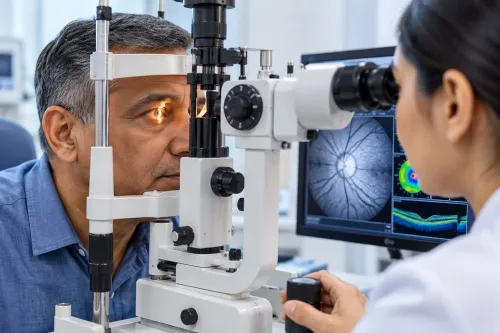
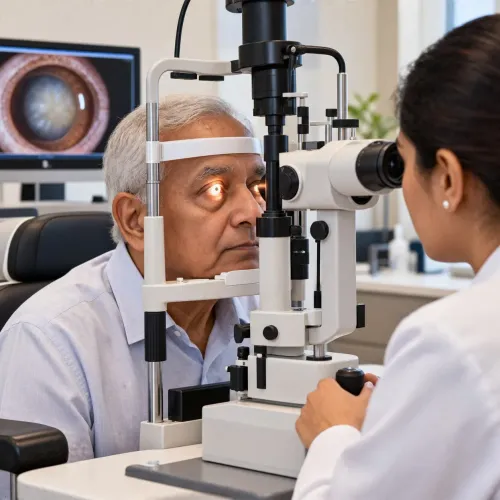
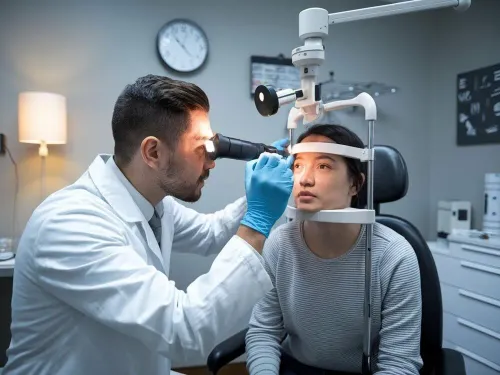
The examination changes with your child’s age and ability to communicate. An infant assessment focuses on fixation, tracking, pupil responses, eye alignment, eye movements and the red reflex, alongside questions about birth history and family eye conditions.
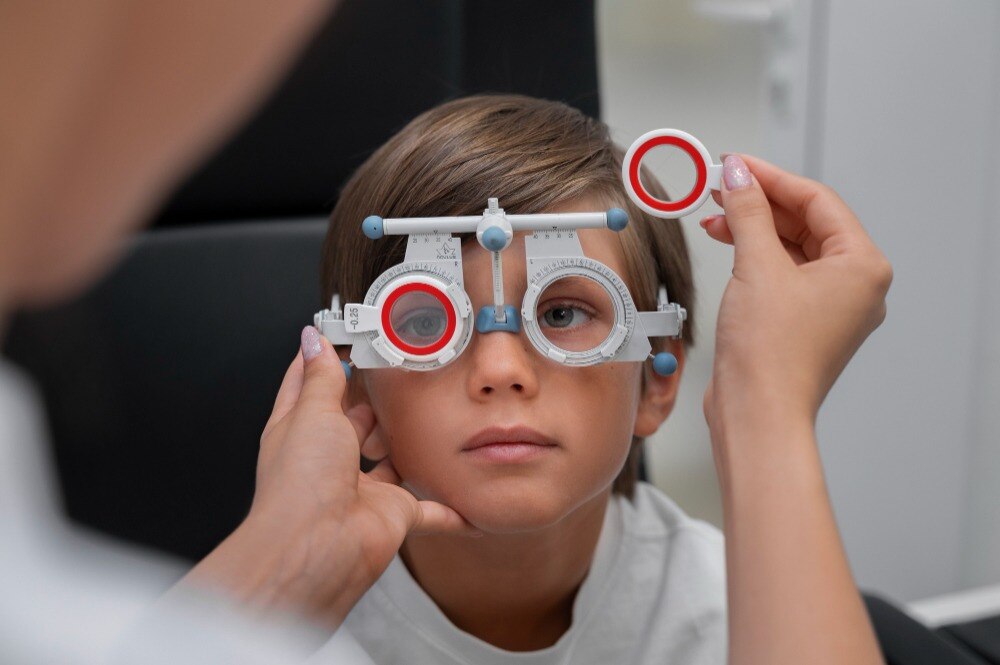
A preschool child may use pictures or matching symbols; an older child usually reads letters or symbols at a measured distance.
| Age | What the examiner checks | What your child may do |
|---|---|---|
| Infant or toddler | Fixation, tracking, pupils, red reflex, alignment and eye movements | Follow a light or toy; formal letter reading is not required |
| Preschool child | Vision in each eye, colour vision when relevant, alignment, focusing and eye health | Match pictures or symbols and respond verbally |
| School-age child | Distance and near acuity, binocular vision, eye movements, colour vision when relevant, refraction and retina | Read letters or symbols, answer comparison questions and describe symptoms |
A school screening is a filter, not a full children eye examination in Mumbai. It can flag reduced acuity or poor alignment but does not explain the cause or fully assess binocular function, eye movements and eye health. A failed screen, symptoms or family history warrants assessment by a child eye specialist in Mumbai.
Young children often need cycloplegic refraction. Eye drops temporarily relax the focusing muscle, preventing active focusing from hiding the true prescription. Without adequate cycloplegia, an adult-style sight test can underestimate or overestimate refractive error, especially when farsightedness or an accommodative problem is suspected.
The drops can sting briefly and blur near vision for several hours, so follow the clinic’s instructions about school, reading and sunlight afterward.
How screening, glasses and amblyopia treatment fit together
A school screening can detect reduced visual acuity, obvious refractive error and some eye-alignment problems. It may use an eye chart, photoscreening camera or a basic cover test, but it cannot explain every cause of poor vision or fully assess eye health, focusing, eye movements and binocular vision.
Arrange specialist assessment after a failed screen, or sooner for:
- A persistently turned eye, abnormal red reflex, drooping eyelid or unusual eye movements
- Suspected amblyopia, prematurity, developmental delay or a family history of childhood eye disease
- Sudden vision change, double vision, severe pain, marked light sensitivity or an eye injury
This distinction matters because a child can adapt to blurred vision in one eye and never complain. Families researching child vision problems in Mumbai should not treat a normal school result as proof that every visual function is normal.
Treatment depends on the finding:
- Refractive error: cycloplegic refraction identifies the prescription accurately, then glasses provide a clear image. Follow-up checks whether vision improves and the prescription remains suitable.
- Squint, or strabismus: glasses may reduce the deviation; prisms, amblyopia treatment or surgery may be added. Surgery aligns the eyes but does not automatically restore vision suppressed in one eye.
- Amblyopia: correct the blur first, then patch the better eye or use prescribed atropine to encourage the weaker eye to work. Starting young improves the chance of useful visual recovery, making paediatric eye care in Mumbai worthwhile after an abnormal screen.
How to choose appropriate paediatric eye care in Mumbai
Check what the appointment includes before comparing prices or travel time. A school screening can flag reduced visual acuity, but it cannot explain poor vision, assess eye health fully, or confirm amblyopia, squint or focusing problems.
| Appointment type | What it can establish | Choose it when |
|---|---|---|
| School screening | Identifies children needing further assessment | A school offers screening or you need a first check |
| Routine eye examination | Measures vision, alignment and refractive error | Your child has no warning signs but needs a baseline review |
| Specialist assessment | Examines eye health, binocular function, movements and possible amblyopia | Screening is abnormal, symptoms persist, or risk factors exist |
| Urgent review | Addresses sudden or painful changes | There is injury, severe pain, new double vision or sudden vision loss |
Before booking paediatric eye care in Mumbai, ask whether the clinician routinely examines children and whether the visit includes pupil, retina, alignment and eye-movement checks. Confirm whether cycloplegic refraction is available; drops can reveal a child’s true prescription when focusing effort hides it.
Prepare the child by explaining that the clinician will use lights, pictures or matching games, not a painful test. Bring previous reports, glasses, school-screening results, medication details and a list of family eye conditions. Dr Nusrat Bukhari's Eye Clinic can be included in your comparison if you ask exactly which tests the booked appointment covers.
Do not wait for a screening camp if an eye turns persistently, a pupil looks white in photographs, an eyelid blocks the pupil, or vision changes suddenly; contact a child eye specialist in Mumbai promptly.
Related services
Paediatric Eye Care Children require specialized eye care to support healthy vision development from infancy through adolescence. With over 21 years of experience, Dr. View service → |
Comprehensive Eye Check-ups Regular eye examinations are essential for maintaining sharp vision and detecting hidden eye problems early. View service → |
Frequently asked questions
When should your child have an eye examination in Mumbai?
Arrange an examination when your child squints, sits close to screens, complains of headaches, struggles with reading, has poor coordination or shows one eye turning. Seek assessment sooner when you notice a visible eye difference or a family history of childhood eye conditions.
What happens during a children’s eye examination?
The specialist checks vision in each eye, eye alignment, focusing, eye movements and the health of the eyes. Testing is adapted to your child’s age and communication abilities, and the specialist explains whether further assessment or treatment is needed.
How do screening, glasses and amblyopia treatment work together?
Screening identifies children who need a full assessment. Glasses correct focusing errors, while amblyopia treatment addresses reduced vision in one eye by encouraging the brain to use it. The appropriate plan depends on the examination findings.
How do you choose appropriate paediatric eye care in Mumbai?
Look for a child eye specialist who routinely examines children, uses age-appropriate tests, explains findings clearly and provides a follow-up plan for glasses, amblyopia or other identified problems.
Keywords